

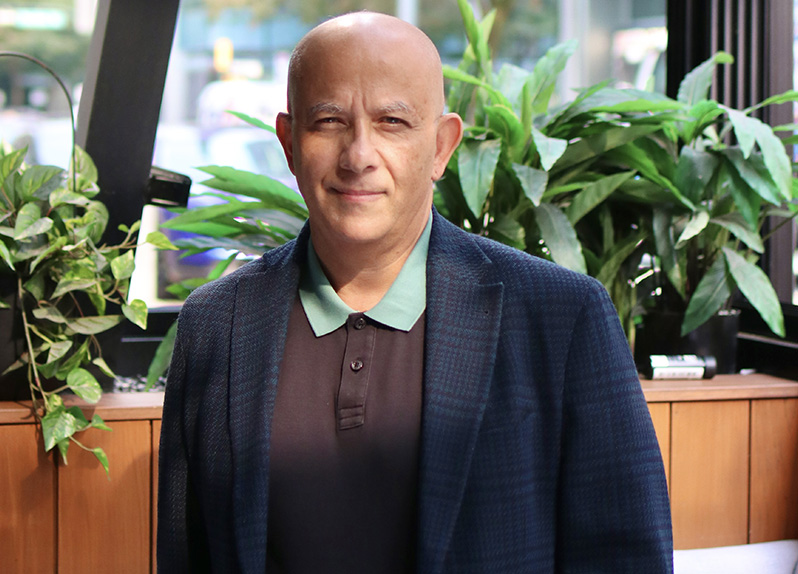

Emad Yacoub has built quite reputation with Glowbal Restaurant Group: In 2013, he was recognized as Independent Restaurateur of the Year thanks to his ever-expanding group of restaurants in Vancouver and Toronto, like Coast, Italian Kitchen, Black + Blue, and the upcoming opening of Riley’s. But he’s not driven by profit. “I’m happy when my business is busy, but it’s not about the money,” he says. “Seeing the smiles on the faces of my customers and staff, that’s what matters most to me and that’s what always leads to future revenue.”
Hospitality, for Yacoub, was the easy choice—he grew up in Cairo, Egypt, in a culture that boasted an open-door policy, regardless of whether you knew the person or not. That friendliness and sense of community was therefore embedded into the fibre of who he is as a person, and it naturally translated to owning and operating restaurants across Canada after emigrating in the 1980s. “I’ve always loved entertaining and having people in my home and taking care of them,” he says. “That has always been my passion. The hospitality industry allows me to do this, so I never feel as though I’m working. I want every guest to feel like a friend of mine, stepping into my home.”
He worked hard, getting his first job in Canada squeezing oranges at the Harbour Castle in Toronto and later moving to Vancouver to build a restaurant empire before bringing his ideology back to Toronto. And his brand of hospitality has worked for him thus far, drawing celebrity clients like athletes and musicians (like Drake and a rather large handful of NHL players) and creating a brand that’s reputable for both a wide range of high-quality food offerings and the kind of service that’s malleable enough to make people feel comfortable, regardless of what that entails. While Yacoub believes that those qualities make a good server, he also feels they apply on a larger scale. The key to being a good entrepreneur, he says, is “understanding and anticipating customer needs, as well as dialing in the focus of your business.” Unlike a server, though, he says a good entrepreneur doesn’t try to cater to everyone, but hones in and truly understands his target market.
And on days when he’s not feeling his best, a reminder that he is human re-centres Yacoub. “There’s always somebody out there that can and will do your job better. You need to constantly push yourself to be the best you can be,” he says. “But always know that tomorrow is a new day. The next day is always one of possibilities and one where you can be better.”
And on those down days, Yacoub can also look to success stories, to the moments and memories he’s created with his patrons, to find inspiration. “Twenty years ago, I received a letter from a customer explaining the impact our restaurant had on him. He was a businessman from South Korea, visiting our restaurant during a work trip, and he enjoyed the dining experience,” he says. “He was especially impressed that we called him the next day to make sure everything had been to his liking, as it is our follow-up to ensure guests are happy. He was so impressed, he mentioned this during a discussion in his warehouse in Korea, sharing how he received a handwritten note from the server wishing him a safe flight and hoping to see him again in Vancouver.
“In his letter to me, he wrote that he would be using our service standards as a training tool for his own business. It was moving to see that the warmth and distinction we apply here make such an impact on people who come through our doors.”
